ABOUT BACKLIT METAL SIGNS
Plan your project around backlit metal signs.
As a professional sign factory, we build custom backlit metal signs to your design: each piece with its own light source and circuit, fabricated to shape with LEDs inside for a soft halo, in stainless steel or aluminum, UL Listed and backed by a 3-year warranty.
Once you approve the shop drawings, production usually runs about 15 business days, and DHL door-to-door shipping adds roughly a week, so figure about 25 days from sign-off to your wall.
What are backlit metal signs?
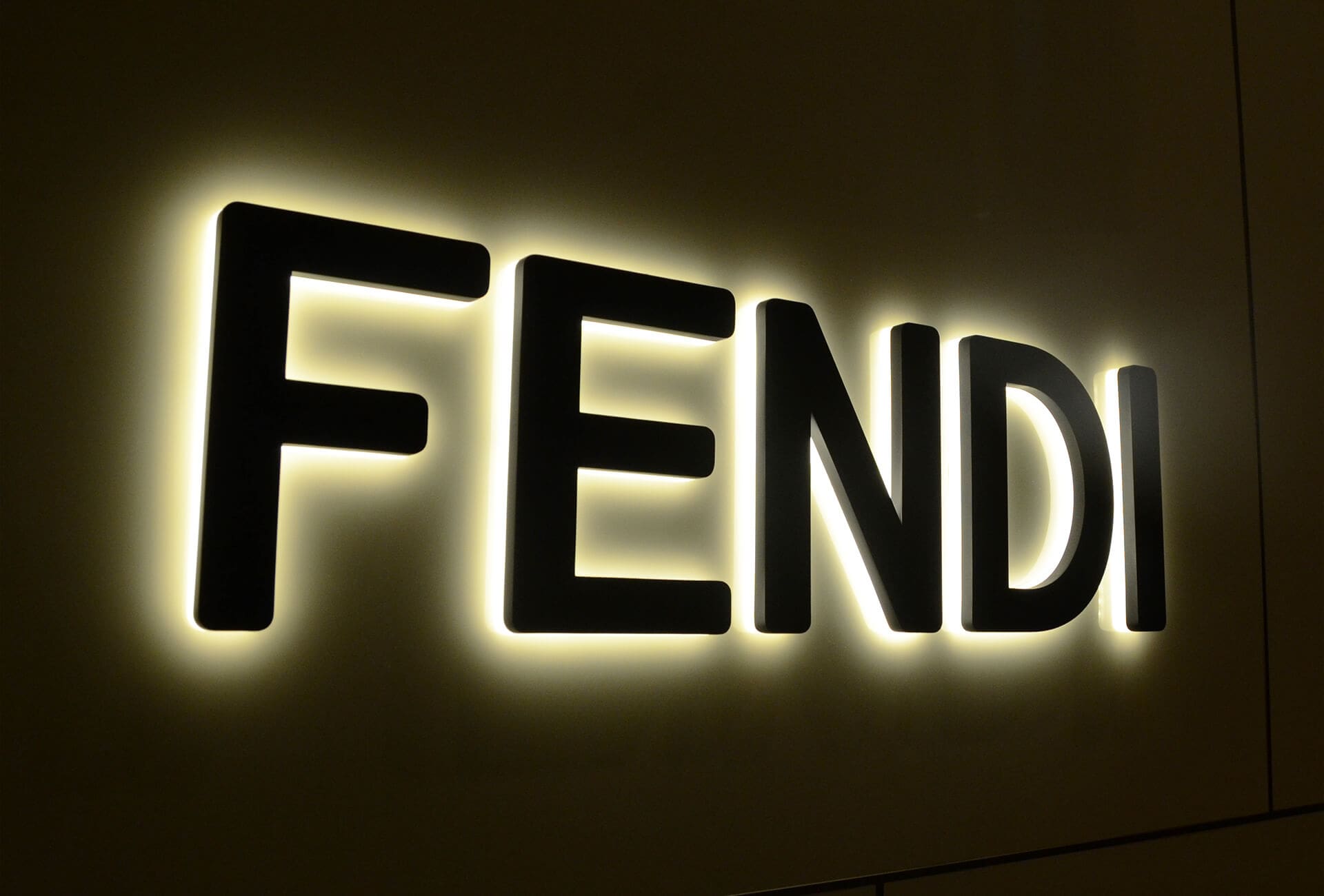
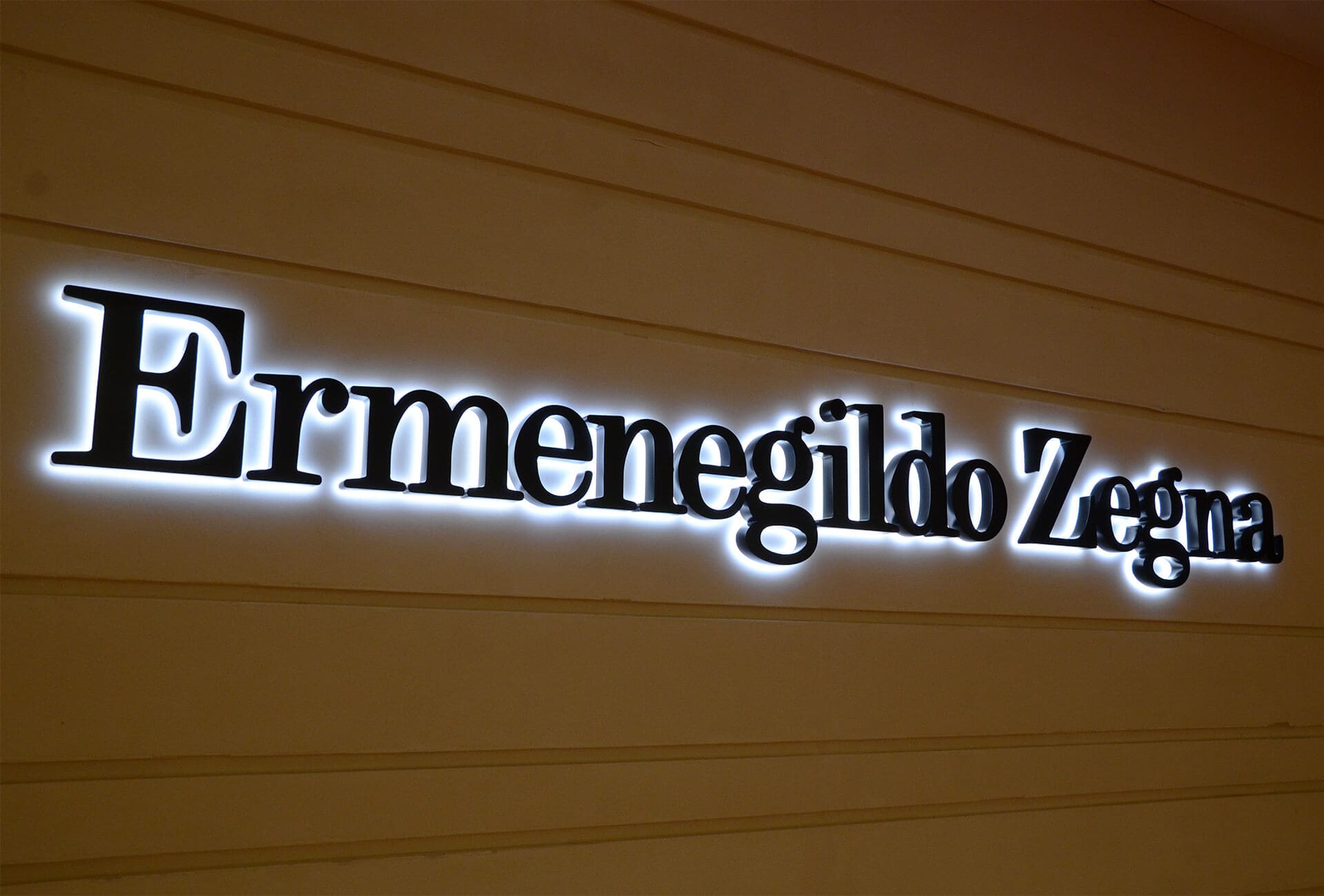
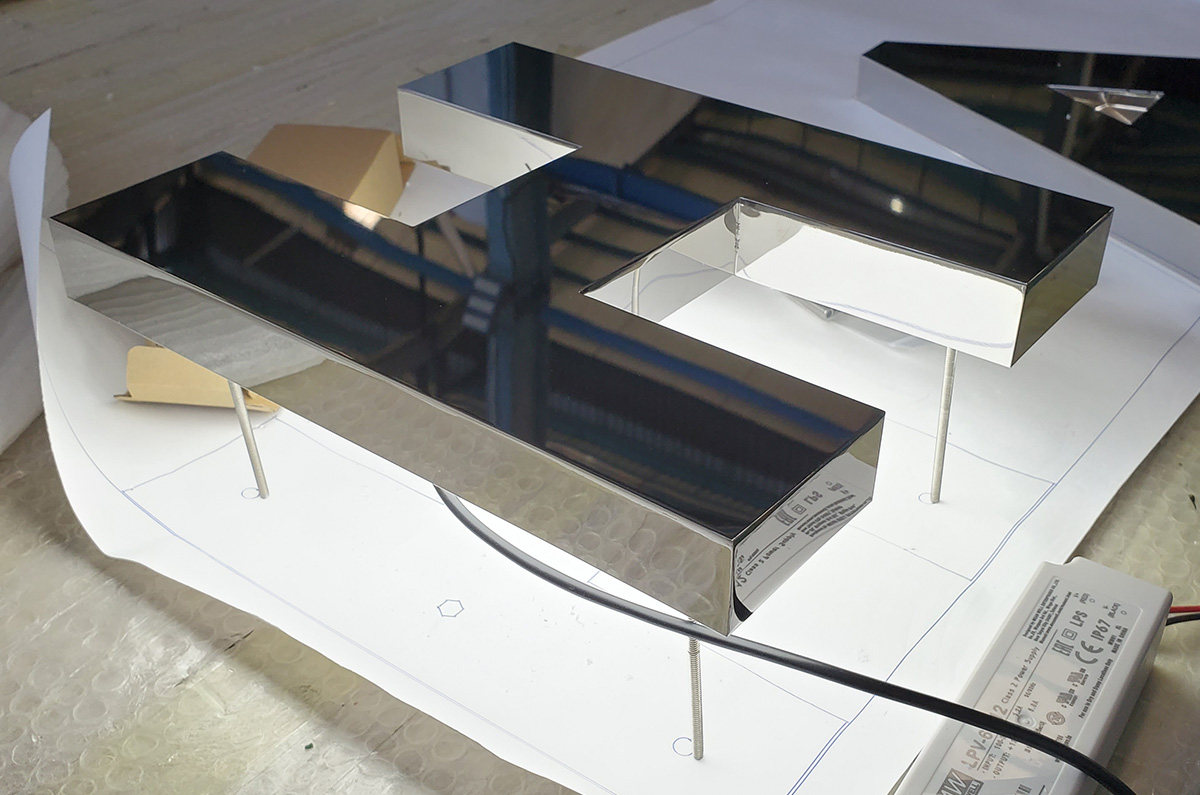
Backlit metal signs are custom illuminated signs built from metal, and each separate piece has its own light source and its own circuit, made as a hollow metal sign shell (called a channel in the U.S.), not a solid slab. The face is laser cut, the returns are fabricated to your shape, and the two are laser welded together into one hollow piece; low-voltage LEDs sit inside and throw light backward, so a soft halo washes onto the wall. Unlit, it reads as a crisp metal sign; lit, the shape is traced on the wall in a soft halo. What sets this page apart is the metal itself: the two main choices are stainless steel, 304 by default and marine-grade 316 for coastal or high-salt sites, and aluminum, which runs on the Common path to cut weight on large pieces. The metal you pick shapes the look, the durability, and the cost, and we walk you through it on the two material pages: stainless steel backlit signs and aluminum backlit signs. Letters, logos, and shapes can all be built as backlit metal signs.
Common applications and related pages
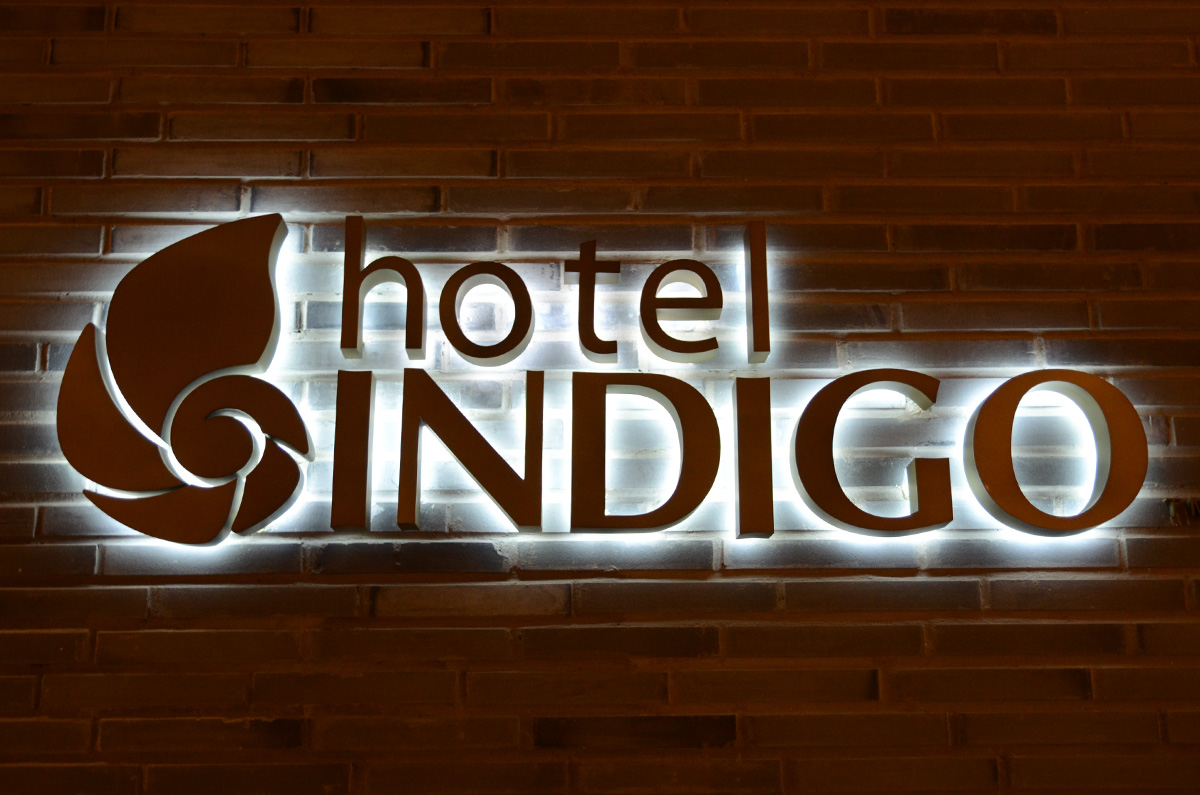
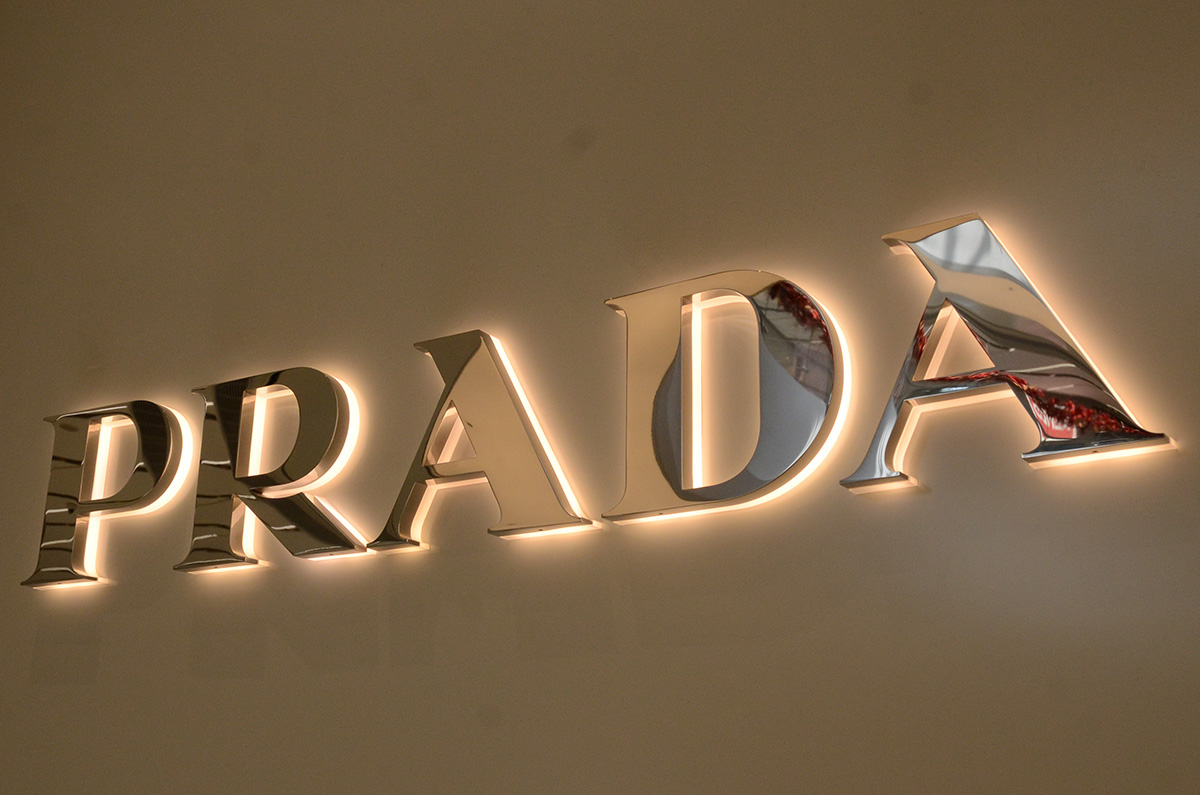
Metal carries a sense of quality, and lit from behind it also carries a soft halo, so backlit metal signs suit businesses that want to look established and premium: entrances, lobbies, and brand walls. This kind of signage reads as substance from across the room, and the signage still rewards a close look. Here are a few typical industries.
A well-made metal sign gives your brand wall a solid, high-end presence, lit or unlit. Signs do bring customers: in a national survey, 76% of consumers had walked into a store they had never visited before because of its signage (per FedEx Office)1.
What we need for your custom project
- Design file
- A vector file works best. A high-resolution raster or an AI-generated flat image is enough for a quote. Skip software auto-tracing: it loses much of the detail, so send the high-resolution raster as it is.
- Property sign rules
- Before any design work starts, check the sign rules with your property, landlord, or property manager: the allowed size range, any finish or color requirements, light color temperature limits, and the required mounting method. If the property has written sign criteria, send them to us directly, and both the quote and the shop drawings will follow them.
- Sizes
- Stay within the sign size range your property allows, then size the letters to the viewing distance: as a rule of thumb, a letter stays readable up to about 120 times its height (a 1-inch letter reads clearly within about 10 feet). Whatever the metal, size it for the distance: in a national shopper study, 90.9% agreed sign letters have to be large enough to read from a passing car (per BrandSpark)3.
- Wall
- Send a photo of the wall where the sign will hang. Wall color and texture affect how bright the reflected halo reads (especially on the Common model), so the photo helps us plan the mounting method and advise on the light color temperature.
- Power
- Tell us the power available on site (AC or DC) and the voltage, so we can match the right Mean Well power supply.
- Indoor or outdoor
- Describe exactly where the sign will be installed: indoors, outdoors, or on a coastal site, which also steers the metal (304 inland, 316 on the coast). For an outdoor sign in an extreme climate (high heat, heavy rain, cold, or dust), tell us before we lock the production details.
- Finish
- Choose from a full range:
- Mirror polished
- Brushed
- Vibration finish
- Painted or powder-coated color, in gloss, semi-gloss, or matte (tell us the exact color and we color-match to Pantone, RAL, SW, or MP swatches)
- Plated metal colors (gold, black titanium, copper, and more)
- Special effects such as wood grain, antique, and marble look
- Light color
- White
- Warm white
- Red, yellow, blue, or green
- Adjustable color (RGB / WRGB)
Choosing your model: Luxury or Common
Backlit metal signs come in two models, Luxury and Common, and they differ in how bright the halo is and how it forms; note that aluminum runs on the Common path. See the point-by-point comparison in Compare below.
Luxury model
- Opal acrylic backing panel partly exposed, with a stronger halo
- Mounts flush or nearly flush to the wall
- Best for premium storefronts and brand walls
View Luxury Model Common model- Opal acrylic backing panel hidden inside the metal sign shell
- Mounts about 3/8 to 3/4 in (10 to 20 mm) off the wall
- Suits storefronts, large signs, curved walls, and outdoor sites
View Common Model Installation and electrical
Installation
- Hire a professional installer for the smoothest result: the job covers drilling the wall, setting stud bolts, routing wires, placing the power supply, and low-voltage wiring.
- We provide the 1:1 template, the wiring diagram, and the installation instructions.
- The Common model must mount off the wall for the reflected halo to form; the Luxury model can sit flush or nearly flush.
Power supply
- The power supply usually sits behind the wall or above the ceiling, in a spot that sheds heat and stays accessible for service.
- For U.S. projects, we plan a 12V DC low-voltage system with a UL Listed Mean Well power supply before production.
Outdoor planning
- 304 stainless steel by default; marine-grade 316 for coastal or near-coast sites.
- For rainy regions we plan waterproof LEDs, drainage holes at the bottom of the metal sign shells, and edge detailing that keeps the halo outline clean.
Backlit metal signs FAQ notes
- Stainless steel or aluminum: which should I choose?
- Stainless steel (304 by default, 316 for the coast) gives the most premium feel, the best durability, and the widest finish range; aluminum is lighter and easier to install at scale, and it runs on the Common path, so it suits large pieces. See stainless steel backlit signs and aluminum backlit signs for each.
- What is the difference between 304 and 316 stainless steel?
- 304 is the default and is right for most indoor and inland signs. 316 adds molybdenum for stronger resistance to salt corrosion, so we use it for coastal or high-salt sites.
- What finishes can metal take?
- The full range: mirror polished, brushed, vibration finish, painted or powder-coated color, plated metal colors, and special effects such as wood grain, antique, and marble look. We color-match to Pantone, RAL, SW, or MP and set it all in the shop drawings.
- Does aluminum look less premium than stainless steel?
- No. Painted, powder-coated, or plated aluminum looks sharp, and it is lighter, which is why it suits large signs. When you want top-tier metal feel and the widest finish options, stainless steel is the pick.
- Indoors or outdoors, and which metal for each?
- Both metals work indoors. Outdoors we default to 304 stainless steel and move to 316 for coastal or high-salt sites; for oversized outdoor pieces we run aluminum on the Common path to cut weight.
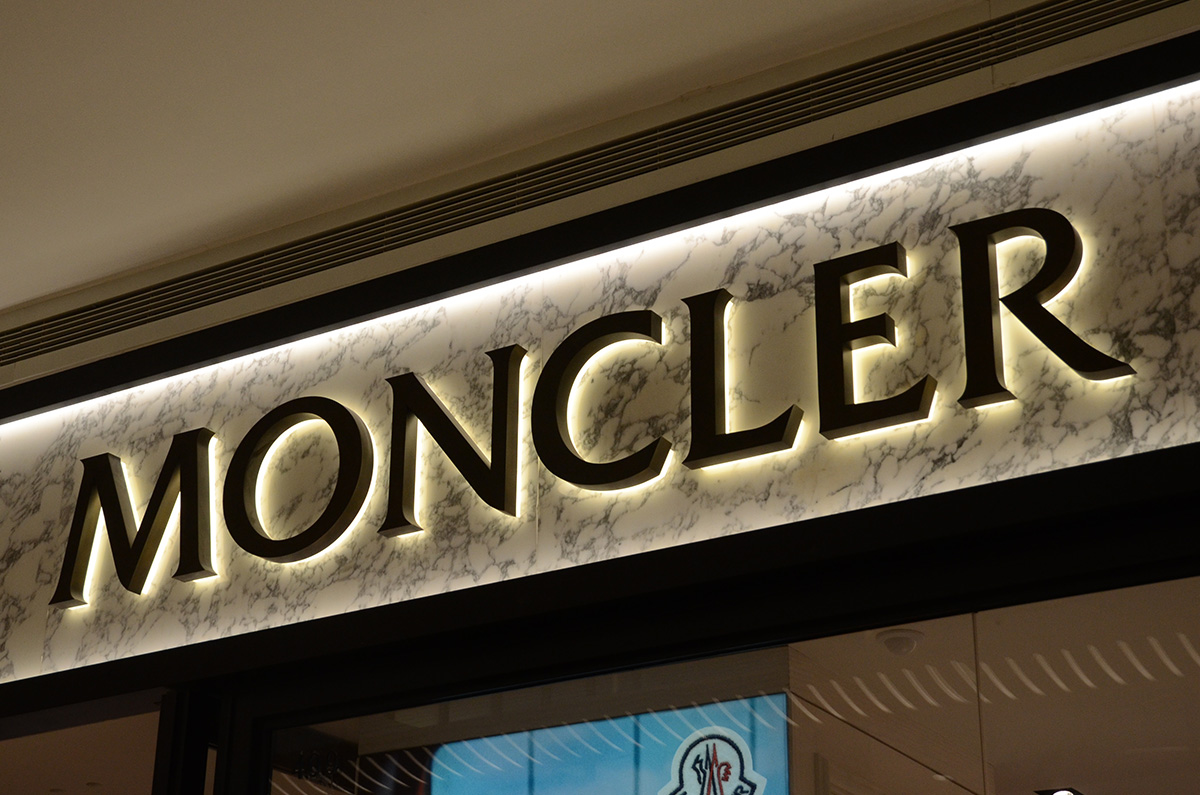
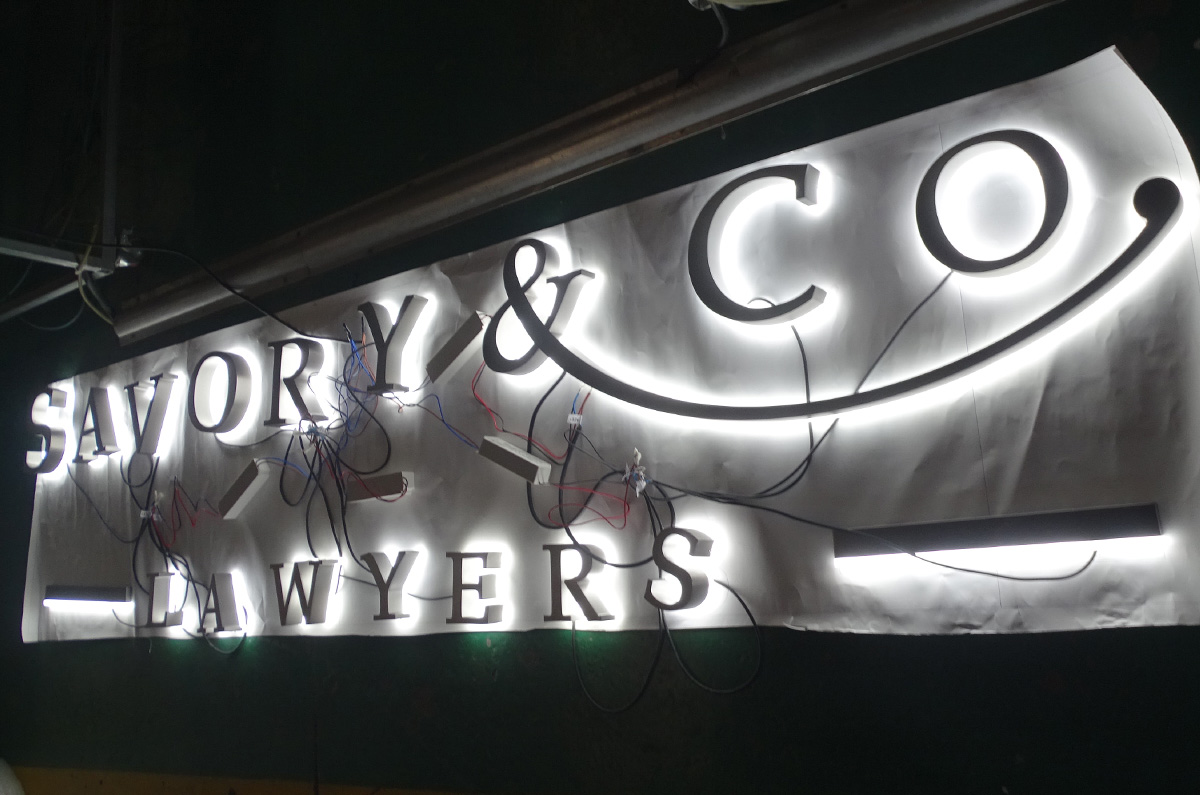 Backlit signs for law firms
 Backlit signs for hotels
 Backlit office signs
 Backlit signs for hospitals